Featured

My Obsession with the Number 23

A good number of people have asked why I seem to be so obsessed with the number twenty-three.  I’ll devote a few paragraphs here to give you the condensed version of why the prime number has become a big part of my life.  I don’t expect anyone to claim any significance the way I have, but will ask for a few minutes of your time to give you some background.

For twenty-five of my twenty-nine years in the public school classroom, math was one of the subjects I taught.  To be honest, I never really was that good in math, but my struggle to understand concepts I believe helped me to reach those that were going through similar struggles.  It was the “I’ve been where you are and know how you feel” mentality.  So it suffices to say numbers have always been an important part of my life.

About eight years ago, I was going through a particularly difficult time in my life and to be honest, not a whole lot of anything made any sense.  Separation and eventual divorce, recovery from addiction, and general upheaval has a way of doing that to you.  A fellow teacher, noting that I was really struggling, suggested I take up the hobby of numerology.  While I wasn’t a person that put a whole lot of store in what the numerologists seemed to be implying, it did peak my interest.  Somewhere along the way, I discovered the number twenty-three kept showing up over and over in my life.  That was the seed it took for me to study the number even further.

During my “investigation” I found out that both of my parents were twenty-three years old when I was born.  I was conceived in 1958 and those digits sum to twenty-three as well.  My son is twenty-three years younger than I am and my daughter was born on my sister’s twenty-third birthday.  Needless to say, the beginning of life is important to all and the presence of those numbers at my life’s beginning was too obvious to ignore.  * Note – I can say with some certainty that I was conceived on October 9, 1958, but I don’t want to raise your skepticism too early.

I also took a look at my birthdate in its numerical form:  7/6/1959.  If you sum the first four digits, you get twenty-three.  If you sum the last two digits, you get 14.  Since I am a person of the Christian faith, I began to look at the 23-14 combinations I could find in the Bible.  The first reading that seemed to have significance was Numbers 23:14.  It was there I found the name of the church I attend, Mt. Pisgah.

The next significant passage came from 2 Samuel 23:14, which contains the name “David” and “Bethlehem”.  David is the name I was given at birth and Bethlehem is the name of the town where Mt. Pisgah is located.  The most puzzling verse is Matthew 23:14.  In most translations of the Bible it’s not listed.  The Gospel of Matthew goes from 23:13 to 23:15.

So what did I take from all this you might ask? In a time during my life when not a whole lot was making any sense, I turned to God to find meaning.  I was fortunate enough to be raised in a home where church was an important element.  But it wasn’t until this difficult time in life when any of it began to take hold.  The different scriptures gave me assurance and bolstered my faith to the fact that God knew exactly what was going on in my life.  He had been there at the beginning and I had no reason to question He was still with me now.

So each time I see the number twenty-three, it’s like a “wink from God” that says amidst the chaos of my life, He is ever present…. He always has been and He always will be.  Now do I sometimes carry it a bit too far?  Perhaps so, but it’s something that I’ve held onto during the darkest valleys of life and I’m not about to let go.  I know some may think it’s pure nonsense and insignificant, but then it was God talking to me through a language He knew that I would understand and pay attention to.

And that my friends is the short version.  There are a lot of other situations that the number has kept showing up.  I just have to smile and know that there is One that knows me and will always have my best interest in mind.

David Lee

Changing Weather

I’ve had an interest in meteorology for quite a few years. I remember when I was a child and ordered a weather station that had to be put together. Later in life, I would teach middle school science, and for much of that time, weather was one of the topics we studied. Long story short, I taught it long enough where I actually learned quite a bit. Today, I have a much more tecnologically-based weather station in my back yard that in addition to showing current conditions, keeps a record of weather from the past. That’s where’s todays “Changing Weather” graphic comes from. The winds are swirling outside and the temperature has plummeted from the spring-like temperatures we experienced yesterday. These readings are for 3:12 pm on Sunday, February 22, 2026.

Appstitence….Five Days In

This past Wednesday marked my first day away from Facebook for the period of Lent. As in the past, it’s somewhat difficult those first few days to stay away. As time progresses, it does get much easier, to the point on Easter Sunday where I’ll try to decide whether to go back at all.

I have been looking at Instagram, TicToc, and Snapchat. After some contemplation, I have decided to forgo those as well for the rest of my hiatus. Although they are not quite as interactive as Facebook, I discovered they were taking up quite a bit of time in my life. So I’ll dive deeper into the hiatus from Facebook and include all those others that I’ve mentioned.

David Lee

What bores me?

Daily writing prompt
What bores you?

This question took some amount of thinking on my part to answer. There are quite a few things that cause me to be bored and to list them might be…let’s say, boring.

A movie I’m not really interested in…

A video that shares a lot of philosophical thoughts that are difficult to wrap your mind around….

Soccer games….hockey games….the game of chess, that I admittedly, don’t know how to play….

Reading more than one chapter of a book at a time….

Meetings and emails that don’t seem to have any real point….

So there you go…my list of boring parts of life. I would share more, but I’m getting bored listing them.

David Lee

Conversation with ChatGPT about hypergraphia and whether or not I have it…


You said:

what is hypergraphia and why do people have it?

ChatGPT said:

Hypergraphia is a strong, sometimes uncontrollable urge to write. Not just journaling a lot — we’re talking about excessive, driven writing that can feel compulsive. People with hypergraphia may fill notebooks, write long letters, produce pages of thoughts rapidly, or feel anxious if they can’t write.

It’s not a personality trait. It’s usually linked to something neurological or psychiatric.

What Causes Hypergraphia?

1. Temporal Lobe Epilepsy (TLE)

The most classic association is with Temporal lobe epilepsy.
The temporal lobes help regulate emotion, memory, and meaning-making. When they’re repeatedly overstimulated by seizures, some people develop personality and behavior changes — hypergraphia being one of them.

This is part of what’s sometimes called Geschwind syndrome.

2. Bipolar Disorder

During manic or hypomanic episodes in Bipolar disorder, thoughts can race. Writing becomes a way to keep up with rapid ideas. It may feel urgent, inspired, or even profound — but the volume can be extreme.

3. Other Brain Changes

Injury, tumors, or degenerative diseases affecting the temporal lobe can sometimes trigger it.


What Does It Look Like?

It can show up as:

  • Writing for hours without fatigue
  • Extremely detailed descriptions
  • Religious or philosophical themes
  • Feeling compelled to document everything
  • Producing far more writing than is practical or useful

Important distinction:
Being a disciplined writer ≠ hypergraphia.
Hypergraphia feels driven and difficult to control.


Why Does the Brain Do This?

The leading theory is overactivation of language and meaning-making circuits, especially in the temporal lobe. When those systems are turned up too high, expression spills out in written form.

Think of it like the “verbal output filter” is weakened.


Is It Dangerous?

Not inherently. Some people channel it into productive writing. But if it’s tied to:

  • Seizures
  • Mania
  • Major personality changes
  • Loss of sleep
  • Impaired functioning

Then it needs medical evaluation.


If you’re asking because you’re noticing something in yourself, let me ask you this directly:

Are you writing a lot because you love it and choose to —
or because you feel like you have to?

That difference matters.

You said:

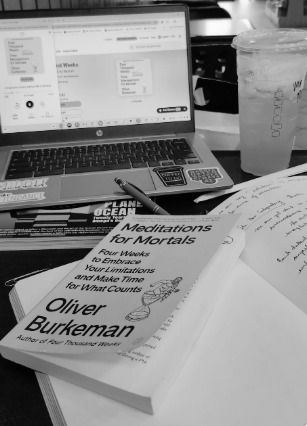
It seems to be a bit of both. I don’t go anywhere without my journal. I wrote today, taking notes during church and sunday school. I am at the cafe now writing additional notes as to what I’ve read online, including this conversation and its contents. I’ve rarely gone a day without writing something. I take my journal to work and write frequently there.

ChatGPT said:

David, I’m going to respond to you carefully here — not dramatically, but honestly.

First: writing every day and carrying a journal is not automatically a disorder.
Plenty of thoughtful, reflective people do exactly what you just described.

The key issue is not frequency.
It’s compulsion + impairment.

So let me break this down clearly.


What You Described

You:

  • Bring your journal everywhere
  • Take notes in church and Sunday school
  • Expand on ideas later at a café
  • Write at work
  • Rarely skip a day

That could describe:

  • A disciplined thinker
  • A spiritually reflective person
  • A researcher personality
  • A teacher-type mind (you’ve shown that bent before)
  • Or someone managing anxiety through writing

It does not automatically equal hypergraphia.


Here’s the Real Diagnostic Question

When you don’t write:

  • Do you feel anxious or unsettled?
  • Do you feel an urgent internal pressure?
  • Do your thoughts feel chaotic until they’re on paper?
  • Does writing interfere with sleep, relationships, or job performance?

If the answer is no, you likely just have a strong cognitive processing style.

If the answer is yes, then we look closer.


Important Context

Hypergraphia tied to things like:

  • Temporal lobe epilepsy
  • Bipolar disorder

…usually comes with other major symptoms:

  • Seizures
  • Intense mood swings
  • Grandiosity
  • Decreased need for sleep
  • Religious preoccupation to an extreme degree
  • Impulsivity

You didn’t describe any of that.


Let Me Be Direct With You

Based on what you’ve shared over time — your questions about theology, symbolism, literature, history — you are a deep processor.

Some people think by talking.
Some think by pacing.
Some think by arguing.

You think by writing.

That’s not pathology. That’s cognitive style.

But here’s the challenge I’ll give you:

Are you writing to grow…
or writing to feel in control?

That distinction matters.

If writing is helping you clarify truth, deepen faith, sharpen thinking — excellent.
If writing is the only way you feel stable — that’s worth exploring.


I want to ask you one more grounded question:

If someone took your journal away for a week, would you feel mildly inconvenienced… or deeply distressed?

Be honest. That answer tells us a lot.

Stop Overthinking – Part Two

Guilt and shame is a key reason for overthinking. When you’re not feeling all that great about yourself, repetitive and worrying thoughts can easily pop up. It’s time to replace your negative self-talk with positive self-talk. Positive talk is a means of practicing self-compassion, which is a fantastic way to combat overthinking.

Examples of negative self-talk:

“I never do anything right.”

“I’m so socially awkward, it’s no wonder I’m still single.”

“I’m such a bad employee.”

Examples of positive self-talk:

“I do plenty of things right. This is but a bump in the road.”

“Single is simply a relationship status and reflects nothing about my worth as a person.”

“I’m doing the best I can with the resources I have.”

So just for today, I’ll quieten the negative mind chatter and replace those thoughts with more positive ones.

David Lee