Shared Reading – “Jesus’ Death” – by Richard Rohr

Richard Rohr’s Daily Meditation

From the Center for Action and Contemplation

Image credit: Lamentation of Christ (detail), Andrea Mantegna, 1470-1474, Pinacoteca di Brera, Milan, Italy.

Week Sixteen

Jesus’ Death

Layered Meanings
Thursday, April 18, 2019
Holy Thursday

Two theologians I deeply respect, Marcus Borg (1942-2015) and John Dominic Crossan (b. 1934), offer important historical and symbolic context for the crucifixion. The theory of “penal substitutionary atonement” only became dominant in recent centuries. [1] Over the next two days, consider their advanced perspective on Jesus’ death on the cross:

This common Christian understanding goes far beyond what the New Testament says. Of course, sacrificial imagery is used there, but the language of sacrifice is only one of several different ways that the authors of the New Testament articulate the meaning of Jesus’s execution. They also see it as the domination system’s “no” to Jesus (and God), as the defeat of the powers that rule this world by disclosing their moral bankruptcy, as revelation of the path of transformation [dying and rising], and as disclosure of the depth of God’s love for us. . . .

Though Mark provides the earliest story of Good Friday . . . Mark’s narrative combines retrospective interpretation with history remembered. . . .

Mark tells us that Jesus was crucified between two “bandits.” The Greek word translated “bandits” is commonly used for guerilla fighters against Rome, who were either “terrorists” or “freedom fighters,” depending upon one’s point of view. Their presence in the story reminds us that crucifixion was used specifically for people who systematically refused to accept Roman imperial authority. Ordinary criminals were not crucified. Jesus is executed as a rebel against Rome between two other rebels against Rome. . . .

[When Jesus died,] “the curtain of the temple was torn in two, from top to bottom” (Mark 15:38). As with the darkness from noon to 3 PM, this event is best understood symbolically and not as history remembered. . . .

To say. . . that the curtain was torn in two has a twofold meaning. On the one hand, it is a judgment upon the temple and the temple authorities . . . who colluded with imperial Rome to condemn Jesus to death. On the other hand, . . . [it] is to affirm that the execution of Jesus means that access to God is now open. This affirmation underlines Mark’s presentation of Jesus earlier in the gospel: Jesus mediated access to God apart from the temple and the domination system that it had come to represent in the first century.

Then Mark narrates a second event contemporaneous with Jesus’s death. The imperial centurion in command of the soldiers who had crucified Jesus exclaims, “Truly this man was God’s Son” (15:30). . . .

That this exclamation comes from a centurion is very significant. According to Roman imperial theology, the emperor was “Son of God”—the revelation of God’s power and will for the earth. According to the same theology, the emperor was Lord, Savior, and the one who had brought peace on earth. But now a representative of Rome affirms that this man, Jesus, executed by the empire, is the Son of God. Thus the emperor is not.

Gateway to Presence:
If you want to go deeper with today’s meditation, take note of what word or phrase stands out to you. Come back to that word or phrase throughout the day, being present to its impact and invitation.

[1] For more on atonement, see Richard Rohr, “Jesus and the Cross,” February 3-9, 2019, https://cac.org/jesus-and-the-cross-weekly-summary-2019-02-09/.

Marcus Borg and John Dominic Crossan, The Last Week: What the Gospels Really Teach About Jesus’s Final Days in Jerusalem (Society for Promoting Christian Knowledge: 2008), 139, 141, 147, 150-151.

Image credit: Lamentation of Christ (detail), Andrea Mantegna, 1470-1474, Pinacoteca di Brera, Milan, Italy.

One Other’s Take on Taking a Break…

A 2016 study of more than 1,000 participants found that people who took a one-week break from Facebook had greater life satisfaction.

“If you stop logging into Facebook, you’re not going to get the shakes and start vomiting and going into physical withdrawals.”

Taking social media breaks, or quitting altogether, isn’t a great option for everyone.

https://onezero.medium.com/what-do-social-media-breaks-accomplish-95471d34130c

I only thought I was retiring…

Heather Fulbright knew she wanted to be a teacher like her dad, David Moser.

Daughter follows in father’s footsteps

  • Sarah Newell williamson
  • Apr 19, 2010

The Moser family has influenced thousands of Catawba County students.

When veteran teacher David Moser leaves the classroom this June, he’ll take with him memories of math-themed songs and contests to name family pets. He’ll leave behind standardized tests and new methods of discipline that his daughter, first-year teacher Heather Fulbright, will have to face.

https://www.hickoryrecord.com/news/daughter-follows-in-father-s-footsteps/article_aae357da-bf5d-5ed3-a54a-a73d6cbefe41.html

Even in the Worst Times…Shared Reading from Rick Warren

Even in the Worst Times, God Is Good

BY RICK WARREN — FEBRUARY 25, 20191.7K

“Protect me, God, because I trust in you. I said to the LORD, ‘You are my Lord. Every good thing I have comes from you’” (Psalm 16:1-2 NCV).Although it’s true not everything that happens in your life is good, that doesn’t mean God is not good, and it doesn’t mean God is not pouring his goodness into your life. God can take the bad and bring good out of it. Even in the worst times, God has a good purpose, a good plan, and a good reason.

Psalm 16:1-2 says, “Protect me, God, because I trust in you. I said to the Lord, ‘You are my Lord. Every good thing I have comes from you’” (NCV).

Would you pray and talk to God about his goodness? Say, “God, you are so good. I could never deserve your goodness. I’m sorry that I have often forgotten or doubted your goodness. Forgive me for ungratefulness and prideful self-centeredness. I am nothing without you. Like David, I would despair if I didn’t know your goodness. Open my eyes to see how good you really are, and let it transform my life.

“God, my soul needs restoring. I don’t always think right. I don’t always choose right. I don’t always feel right. I need you to restore my damaged soul, my mind, my will, and my emotions. As I continue learning about your goodness, I trust that my sins have been forgiven because I’ve come to you and said I need a Savior. I’m going to release the people who have hurt me and pray a prayer of blessing over them. I’m going to team up with you and ask you to help me with the load I’m carrying.”

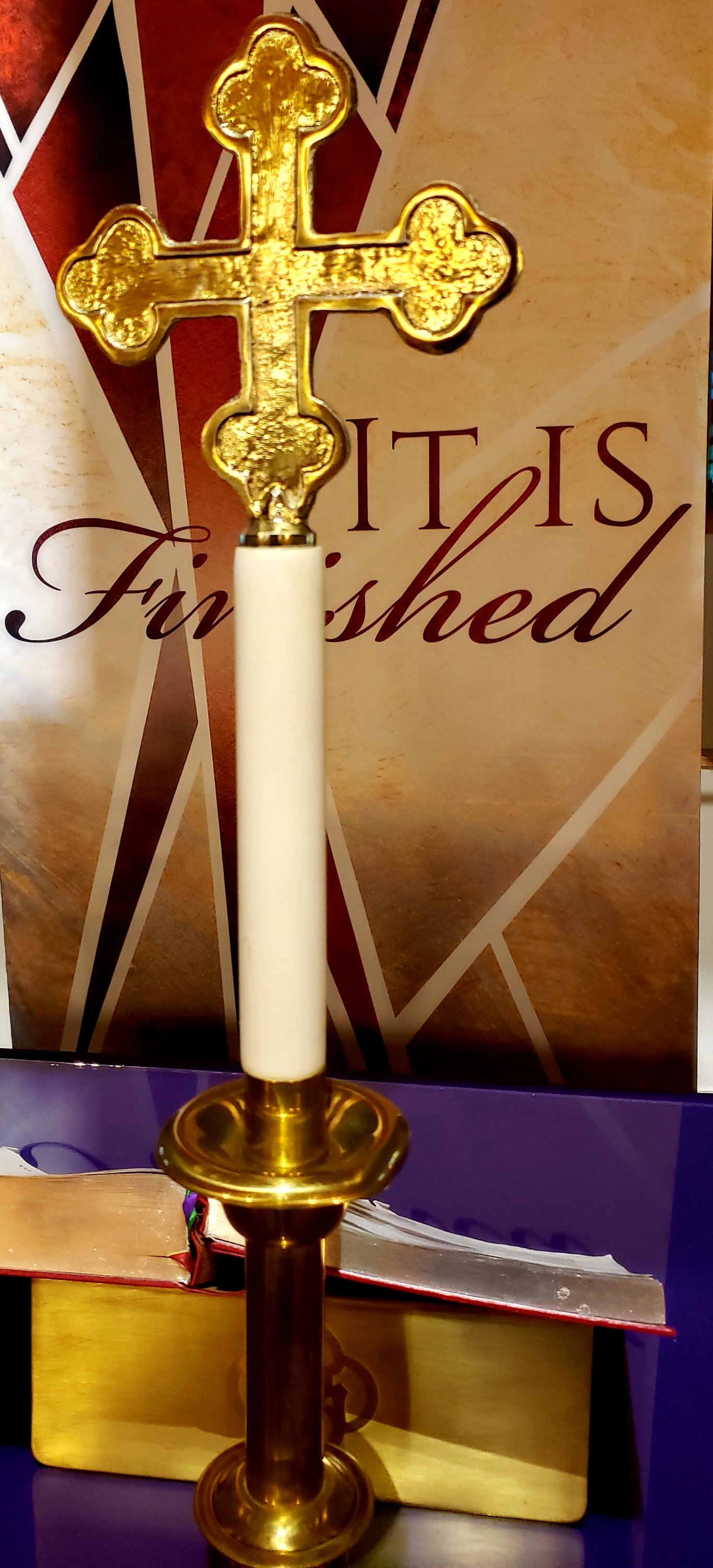
If you don’t know Jesus as Savior, you can pray this right now: “Jesus Christ, I want to get to know you. I want to learn to love you and trust you. I humbly ask you to accept me into your family, not because I deserve it but because on the cross, it was finished. You paid it all! Thank you. I pray this in your name. Amen.”

If you just prayed to accept Jesus, please email me at Rick@PastorRick.com and let me know about it. I’d like to send you some free materials to help you start your journey with Jesus.PLAY today’s audio teaching from Pastor RickTalk It Over

  • How have you seen God turn the bad things that happen to you into something good?
  • When you look back and recognize God’s goodness, how does it affect your perspective right now?
  • Why is it prideful not to acknowledge God’s goodness?

Daily Readings for Thursday, April 18th

24 Hours a Day

Meditation for the Day

I should strive for a friendliness and helpfulness that will affect all who come near to me. I should try to see something to love in them. I should welcome them, bestow little courtesies and understandings on them, and help them if they ask for help. I must send no one away without a word of cheer, a feeling that I really care about them. God may have put the impulse in some despairing one’s mind to come to me. I must not fail God by repulsing that person. They may not want to communicate with me unless they are sure of a warm welcome.

Prayer for the Day

I pray that I may warmly welcome all who come to me for help. I pray that I may make them feel that I really care.

Language of Letting Go

Freedom

Many of us were oppressed and victimized as children. As adults, we may continue to keep ourselves oppressed.

Some of us don’t recognize that caretaking and not setting boundaries will leave us feeling victimized.

Some of us don’t understand that thinking of ourselves as victims will leave us feeling oppressed.

Some of us don’t know that we hold the key to our own freedom. That key is honoring ourselves, and taking care of ourselves.

We can say what we mean, and mean what we say.

We can stop waiting for others to give us what we need and take responsibility for ourselves. When we do, the gates to freedom will swing wide.

Walk through.

Today, I will understand that I hold the key to my freedom. I will stop participating in my oppression and victimization. I will take responsibility for myself, and let others do as they may.