Daily Readings for Saturday, March 21st

Meditation for the Day

All is fundamentally well. That does not mean that all is well on the surface of things. But it does mean that God’s in His heaven and that He has a purpose for the world, which will eventually work out when enough human beings are willing to follow His way. “Wearing the world as a loose garment” means not being upset by the surface wrongness of things, but feeling deeply secure in the fundamental goodness and purpose in the universe.

Prayer for the Day

I pray that God may be with me in my journey through the world. I pray that I may know that God is planning that journey.

From Twenty-Four Hours a Day 


Considering Commitment

Pay attention to your commitments.

While many of us fear committing, it’s good to weigh the cost of any commitment we are considering. We need to feel consistently positive that it’s an appropriate commitment for us.

Many of us have a history of jumping — leaping headfirst — into commitments without weighing the cost and the possible consequences of that particular commitment. When we get in, we find that we do not really want to commit and feel trapped.

Some of us may become afraid of losing out on a particular opportunity if we don’t commit. It is true that we will lose out on certain opportunities if we are unwilling to commit. We still need to weigh the commitment. We still need to become clear about whether that commitment seems right for us. If it isn’t, we need to be direct and honest with others and ourselves.

Be patient. Do some soul searching. Wait for a clear answer. We need to make our commitments not in urgency or panic but in quiet confidence that what we are committing to is right for us.

If something within says no, find the courage to trust that voice.

This is not our last chance. It is not the only opportunity we’ll ever have. Don’t panic. We don’t have to commit to what isn’t right for us, even if we try to tell ourselves it should be right for us and we should commit.

Often, we can trust our intuitive sense more than we can trust our intellect about commitments.


In the excitement of making a commitment and beginning, we may overlook the realities of the middle. That is what we need to consider.

We don’t have to commit out of urgency, impulsivity, or fear. We are entitled to ask, Will this be good for me? We are entitled to ask if this commitment feels right.

Today, God, guide me in making my commitments. Help me say yes to what is in my highest good, and no to what isn’t. I will give serious consideration before I commit myself to any activity or person. I will take the time to consider if the commitment is really what I want.

From The Language of Letting Go by Melody Beattie

Working from Home – Day Two – Friday, March 20th

My second day of working from home began early this morning, with a video meeting with our school superintendent. He shared the latest information on what the schools were doing in preparation for the upcoming weeks of at-home learning.

Another meeting was held early this afternoon with our grade level teachers from across the system. We were told about subject level meetings, as well as possible formats that our lessons might take.

I did get one communication from a parent whose child’s packet was missing her social studies and science assignments. I assured her that there would be online opportunities for her to have alternate assignments and that seemed satisfactory to the parent.

I also located several other resources that I’ll be able to utilize with the online learners over the coming weeks and have bookmarked those for easy future reference.

I also was able to correspond with a few students who had found their way back to Google classroom and was able to answer their questions and send them a friendly greeting. I even had one students who has taken it upon herself to do some research on the last topic we were covering in science and that brought a big smile to my face.

One last thing that I did today was work with the video recorder on my home computer. I think this will provide a more reliable way to share lessons once we’ve reached that part of the at-home journey. I am pretty sure I’ll be able to save those files to share with the students. I even made a demo video and the results were pretty good for a first-timer.

So day number two is completed and on Monday, it’s the real deal as we continue this journey that no one saw coming…and taking it one day at a time….and today has been a good one.

David Lee

Shared Reading: Coronavirus: Four members of New Jersey family die

Four people in the same family have died from coronavirus in the US state of New Jersey, with three more relatives in hospital.

Grace Fusco, 73, and six of her adult children fell ill after attending a large family gathering.

Nearly 20 other relatives are now self-quarantining and waiting to find out if they have also been infected.

The death toll across the US has continued to rise, as experts warn against any kind of social gathering.

‘Unbearable tragedy’

The four family members who died are Grace Fusco and her children Rita Fusco-Jackson, Carmine Fusco and Vincent Fusco.

Rita Fusco-Jackson, a Catholic school teacher, 55, died on Friday. She had no underlying health issues, according to state health commissioner Judith Persichilli.

New Jersey health officials said Ms Fusco-Jackson was the second person to die from Covid-19 in the state, and the first fatality had also recently attended a Fusco family gathering.

Carmine Fusco died on Wednesday, followed hours later by his mother, Grace Fusco.

According to the New York Times, Grace Fusco died without knowing that two of her children had already succumbed to the deadly respiratory illness sweeping the planet.

On Thursday, Vincent Fusco died in the same hospital where his mother had recently passed.

According to family member Paradiso Fodera, 19 family members who attended the same dinner are now self-isolating, and have waited nearly a week to learn the results of their virus tests.

“Why don’t the family members who are not hospitalised have the test results? This is a public health crisis,” Ms Fodera told CNN.

She continued: “Why should athletes and celebrities without symptoms be given priority over a family that has been decimated by this virus?”

“This is an unbearable tragedy for the family.”

Banner image reading 'more about coronavirus'
Banner

A niece of Fusco-Jackson took to Facebook to grieve the sudden loss, NBC reported.

“My mom is one of 11, last Thursday I went to sleep having 10 aunts and uncles! Friday I woke up and found out I only had 9. Just a few minutes ago I found out I only have 8,” she wrote.

“Please hold your love ones close and cherish every second and minute you have together.”

‘Stay at home’

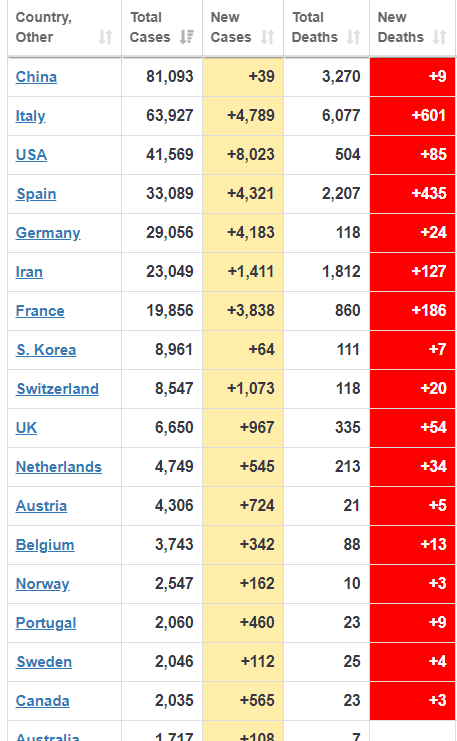
More than 200 people have now died from Covid-19 in the US, with over 15,000 known infections and cases in all 50 states.

More and more US states and cities have begun lockdown procedures in an effort to prevent the rampant virus from overwhelming hospitals.

Testing in the US has lagged behind other industrialised nations, leading to questions about the actual spread of the infection in North America.

Source: https://www.bbc.com/news/world-us-canada-51978164

Shared reading: Coronavirus: When will the outbreak end and life get back to normal?

The world is shutting down. Places that were once teeming with the hustle and bustle of daily life have become ghost-towns with massive restrictions put on our lives – from lockdowns and school closures to travel restrictions and bans on mass gatherings.

It is an unparalleled global response to a disease. But when will it end and when will we be able to get on with our lives?

Prime Minister Boris Johnson has said he believes the UK can “turn the tide” against the outbreak within the next 12 weeks and the country can “send coronavirus packing”.

But even if the number of cases starts to fall in the next three months, then we will still be far from the end.

It can take a long time for the tide to go out – possibly years.

It is clear the current strategy of shutting down large parts of society is not sustainable in the long-term. The social and economic damage would be catastrophic.

What countries need is an “exit strategy” – a way of lifting the restrictions and getting back to normal.

But the coronavirus is not going to disappear.

If you lift the restrictions that are holding the virus back, then cases will inevitably soar.

“We do have a big problem in what the exit strategy is and how we get out of this,” says Mark Woolhouse, a professor of infectious disease epidemiology at the University of Edinburgh.

“It’s not just the UK, no country has an exit strategy.”

It is a massive scientific and societal challenge.

Source: https://www.bbc.com/news/health-51963486

Quotes of the Day for Friday, March 20th

 “It’s impossible to begin to learn that which you think you already know,” Epictetus said

“Only an idiot turns up their nose at how other people do things. Sure, nine times out of ten, you’re right and they’re wrong. But that one time? That’s the game changer.” Ben Franklin in Poor Richard’s Almanack

Shared reading: Coronavirus: California issues state-wide 'stay at home' order

California has issued a “stay at home” order to residents as it tries to stem the march of the coronavirus across the most populous US state.

Governor Gavin Newsom told Californians they should only leave their homes when necessary during the pandemic.

He earlier estimated more than half of the 40 million people in his state would contract Covid-19 in just the next two months.

The virus has claimed 205 lives in the US and infected more than 14,000.

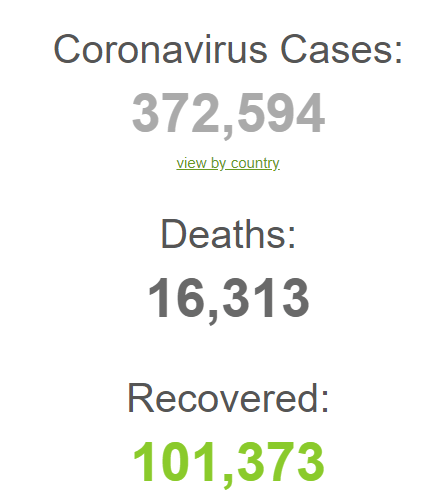
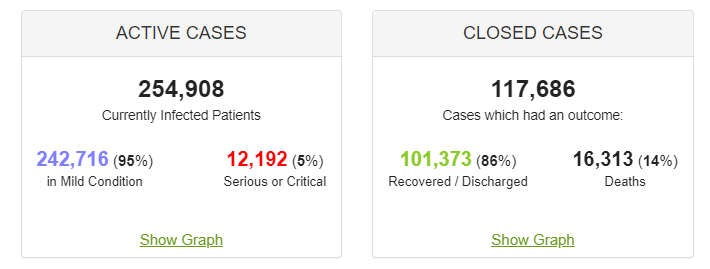
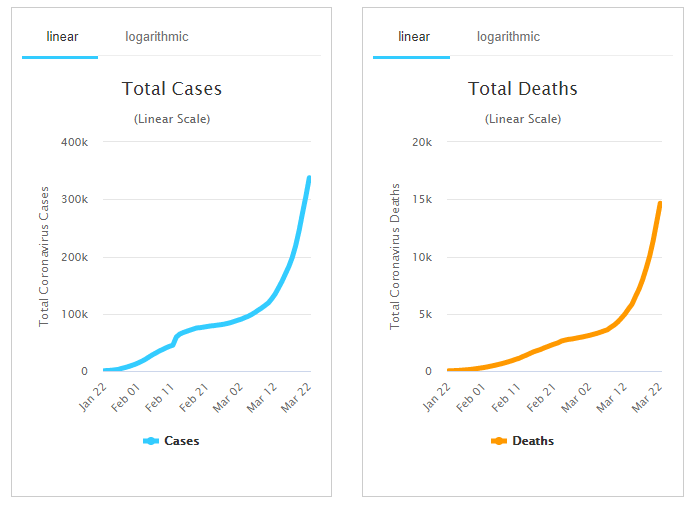
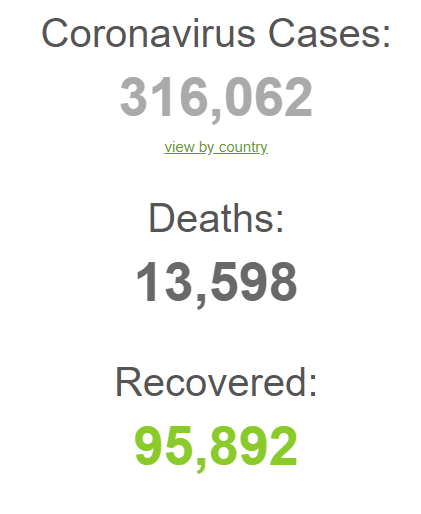
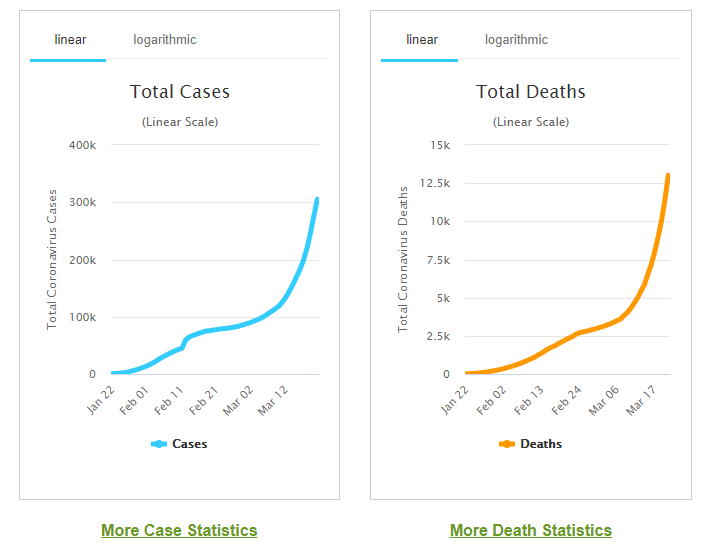
Globally nearly 250,000 patients have tested positive for the respiratory illness and more than 10,000 have died.

What does California’s order mean?

Mr Newsom said on Thursday evening: “This is a moment we need to make tough decisions. We need to recognise reality.”

California is among the first US states to bring in blanket restrictions. Earlier this week Nevada said non-essential businesses should close for 30 days.

The governor’s order will allow residents to leave their homes to buy groceries or medicine, or walk a dog or take exercise, but seeks to limit public interactions.

It will force businesses deemed non-essential to close, while allowing others including grocery stores, pharmacies, banks and petrol stations to stay open.

About half of the state’s population is already subject to similar stringent measures, including the city of San Francisco.

The Democratic governor said parts of the state were seeing infection rates double every four days.

Speaking at a press conference in Sacramento, Mr Newsom said the virus “will impact about 56% of us – you do the math in the state of California, that’s a particularly large number”.

The governor did not clarify how his officials had calculated that figure, which would amount to nearly 22.5 million infected people.

But his spokesman acknowledged the estimate did not take into account the mitigation measures being implemented state-wide.

Source: https://www.bbc.com/news/world-us-canada-51970815